The Galerie für
Zeitgenössische Kunst, a foundation based in Leipzig, is an exhibition
space for contemporary art and a museum for art post 1945. GfZK promotes
and imparts international and national artistic positions on its own
premises and in public spaces, it initiates cooperations and carries out
research-based artistic projects. The fine art collections mirror the
interest in the natural integration of diverse forms of expression, of
different artistic positions and generations.
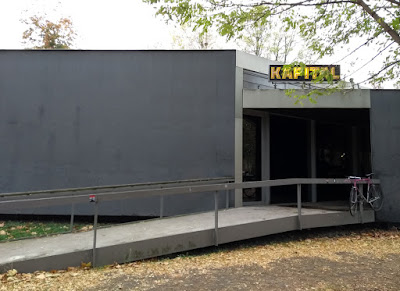
Since the inception of GfZK, addressing local themes in connection with global developments is a focus. Migration and transcultural phenomena offer important starting points, also for reflecting the GfZK’s modes of action. The possibility of participation and the social agency of art are of particular importance. In this sense, the work of the GfZK focuses less on defining a canon of values than on exploring the potentials of artistic and curatorial work and of art mediation. In the presentations of the collection, new artistic productions, and research projects, what is concerned is facilitating manifold perspectives and developing new working methods.
The GfZK has gradually established itself internationally as a place where the reciprocal relationship between art and architecture and between art and design is addressed and the relationship between presentation, the construction of meaning and the ascription of value is questioned. In this, the educational mandate of public institutions plays just as important a role as the exploration of the economic conditions for the production of contemporary art. How can these conditions be addressed, jointly designed, and circumvented? What spaces for actions can be opened up for artists and visitors?
The foundation Galerie für Zeitgenössische Kunst is supported by the Free State of Saxony, the City of Leipzig and the Friends of the GfZK.

Since the inception of GfZK, addressing local themes in connection with global developments is a focus. Migration and transcultural phenomena offer important starting points, also for reflecting the GfZK’s modes of action. The possibility of participation and the social agency of art are of particular importance. In this sense, the work of the GfZK focuses less on defining a canon of values than on exploring the potentials of artistic and curatorial work and of art mediation. In the presentations of the collection, new artistic productions, and research projects, what is concerned is facilitating manifold perspectives and developing new working methods.
The GfZK has gradually established itself internationally as a place where the reciprocal relationship between art and architecture and between art and design is addressed and the relationship between presentation, the construction of meaning and the ascription of value is questioned. In this, the educational mandate of public institutions plays just as important a role as the exploration of the economic conditions for the production of contemporary art. How can these conditions be addressed, jointly designed, and circumvented? What spaces for actions can be opened up for artists and visitors?
The foundation Galerie für Zeitgenössische Kunst is supported by the Free State of Saxony, the City of Leipzig and the Friends of the GfZK.
 |
| Sarah Sze. GFZK Leipzig |
 |
| Sarah Sze. GFZK Leipzig |
 |
| Sarah Sze. GFZK Leipzig |
Pass-Stücke
with: Klaus
vom Bruch, Christine Hill, Ernst Wilhelm Nay, Gregor Peschko, Suse
Weber, Franz West, artists of the Texte zur Kunst editions
Curated by Vera Lauf and Julia Schäfer
Curatorial assistance Nora Becker and Mengting Ying
"Artistic works found in the
collection of a museum are sometimes not created (exclusively) for the
institutional framework; some of them were intended for a wider
audience, incorporate elements from popular everyday culture, aspire to
influence the public and private sphere or even to be used by the
public.
The exhibition Pass-Stücke shows works from the GfZK collection that explicitly address a broader public, encouraging their audience to engage in debate or take action. The contexts of their production and reception conditions are examined, and the question is raised as to whether or how they could be reactivated in the museum.
The entire collection of editions from Texte zur Kunst was donated by Arend and Brigitte Oetker to the Galerie für Zeitgenössische Kunst".
The exhibition Pass-Stücke shows works from the GfZK collection that explicitly address a broader public, encouraging their audience to engage in debate or take action. The contexts of their production and reception conditions are examined, and the question is raised as to whether or how they could be reactivated in the museum.
The entire collection of editions from Texte zur Kunst was donated by Arend and Brigitte Oetker to the Galerie für Zeitgenössische Kunst".


